 Tuscan
 Olive Oil: The Harvest, the Mill and How to Taste It
Every autumn, when the vineyards turn gold and the grapes are already in the cellar, Tuscany starts its second harvest. Nets go down under the olive trees, the mills run day and night, and for a few weeks the whole region smells of cut grass and green pepper. This is the story of how that oil is made, and how to tell a great one from a tired one.
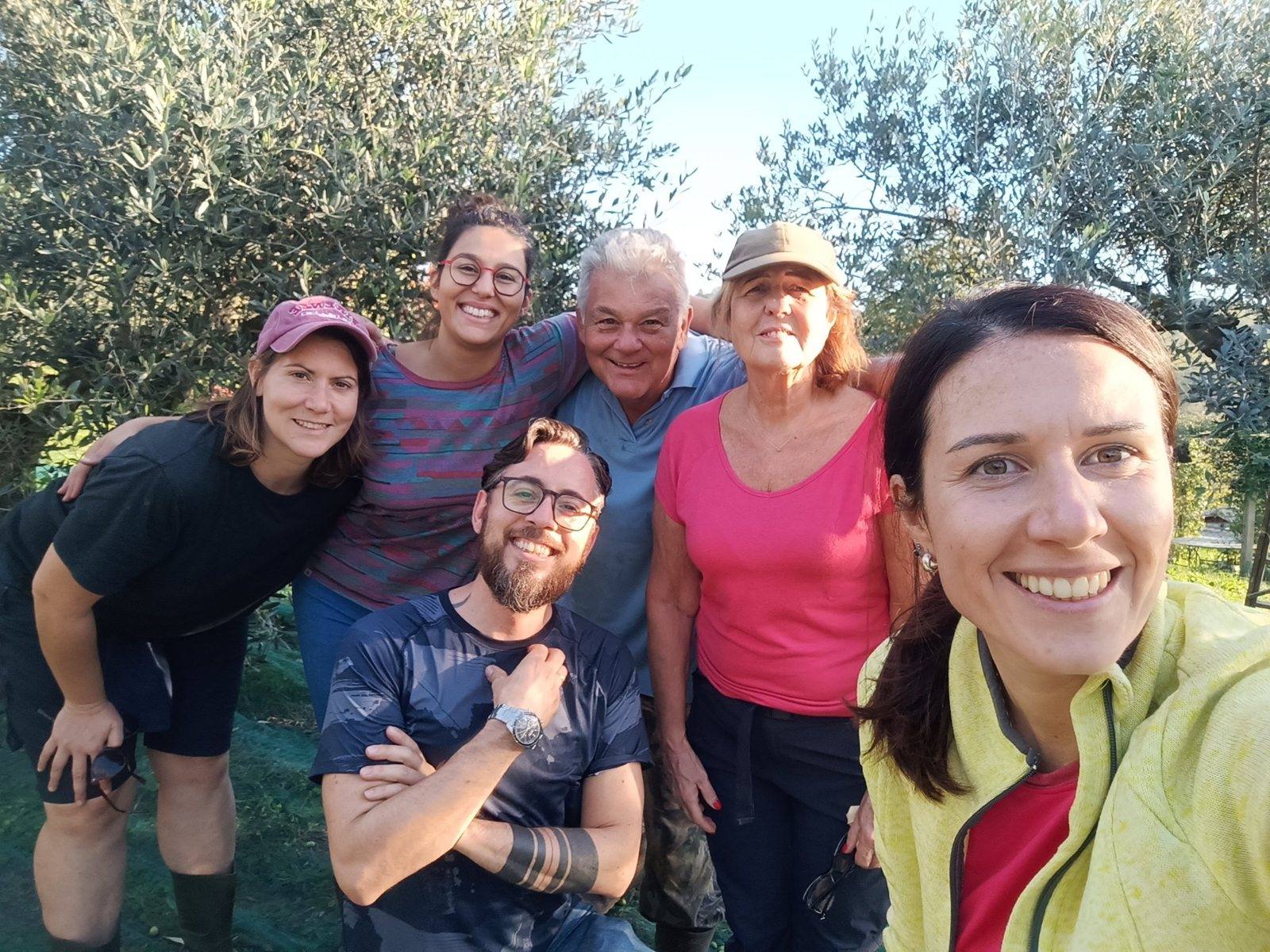
Olive oil is on the table at every meal in Tuscany, and it is on the table on every one of our tours too. This guide covers how the olives grow, when and how they are picked, what happens at the mill, and how to taste oil the way professional tasters do, including the defects most supermarket bottles would rather you did not notice, and what the official grades and acidity on the label really mean.
How olives grow in Tuscany
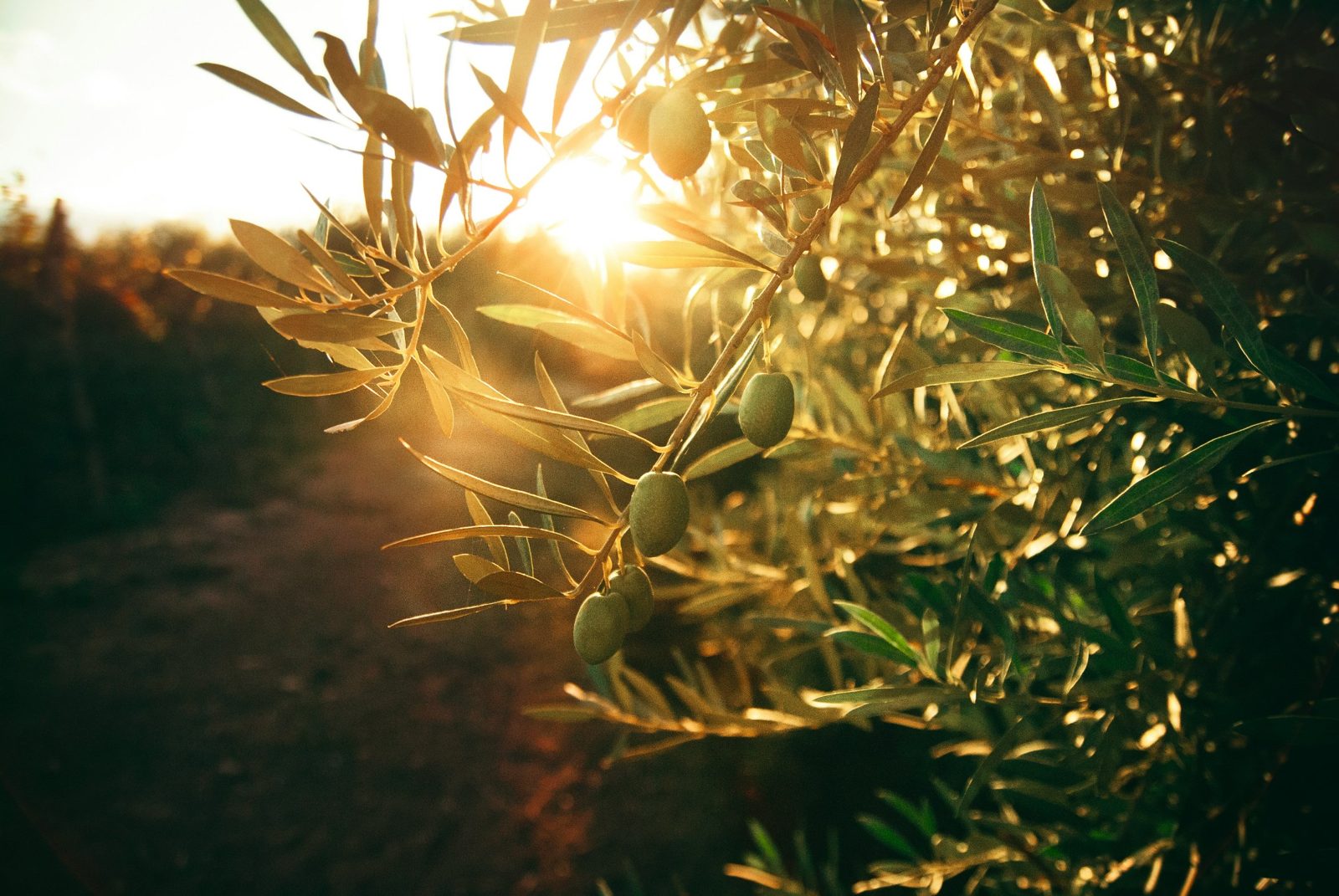
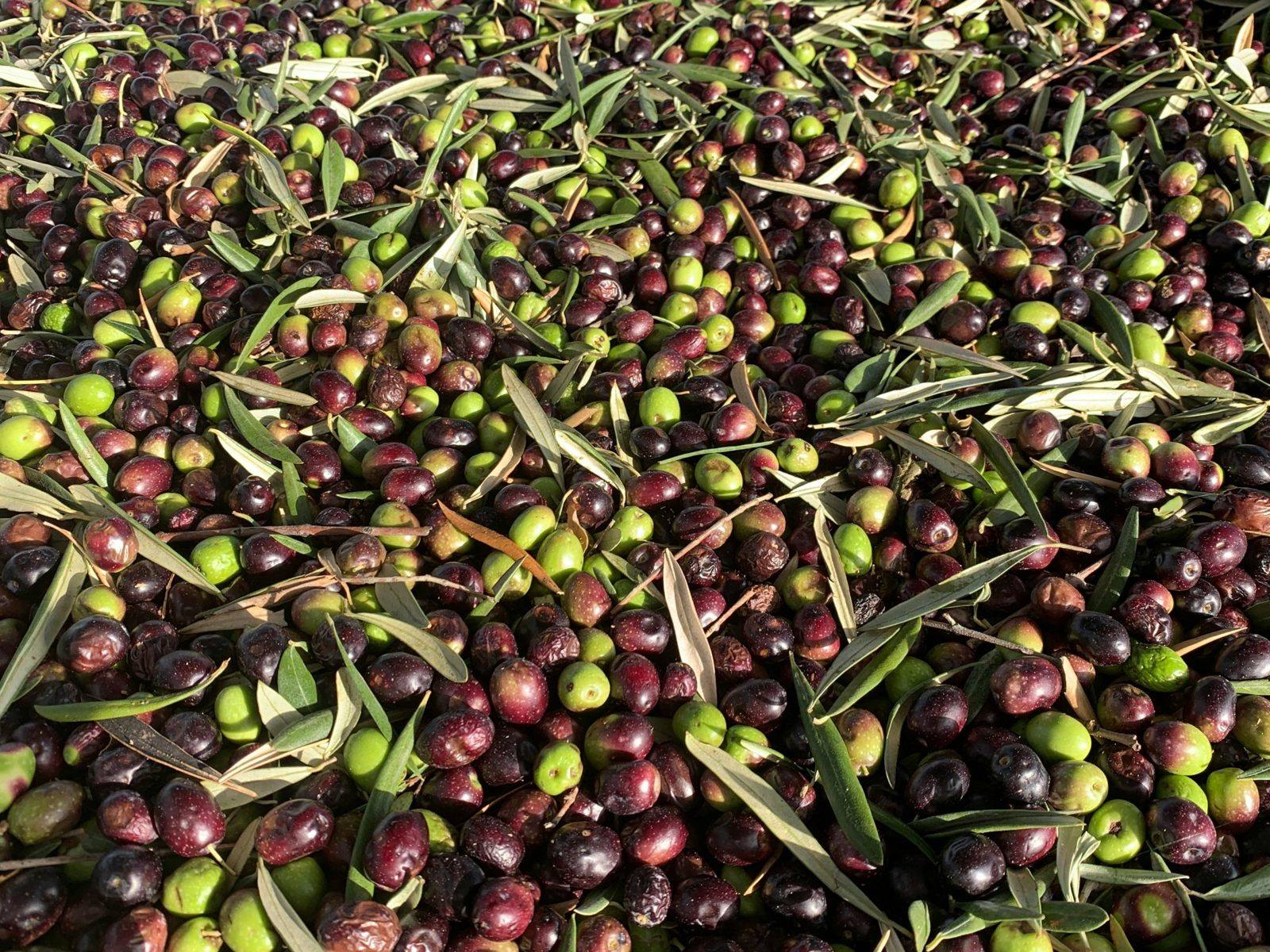
The olive tree is slow, stubborn and long-lived. It flowers in late spring, sets its small green fruit in early summer and spends the hot months building oil inside the olive. In autumn the fruit begins to change colour, from green to violet to black: this ripening, called invaiatura, is what every grower watches.
Tuscan groves sit on the same hills as the vineyards, often on terraces held up by dry-stone walls, and they live close to the northern limit of where olives can grow. Cold winters are a real threat: the great frost of January 1985 killed almost every olive tree in Tuscany, and most of the groves you see today grew back from the old stumps or were replanted. Truly ancient trees are now rare. One of them, around 300 years old, still stands at an estate in Chianti where we stop for an oil and wine tasting: it survived the frost that took nearly all the others. That hard climate is also why Tuscan oil tastes the way it does.
A handful of native varieties do most of the work: Frantoio, the backbone of Tuscan oil, fruity and peppery; Moraiolo, small, hardy and intensely bitter; Leccino, rounder and softer; and Pendolino, planted among the others to pollinate them. Most Tuscan oils are a blend of the four, the way most Chianti is a blend of grapes.
The harvest: nets, hands and timing
The olive harvest in Tuscany usually runs from mid-October to the end of November, later on the higher hills. Growers here pick early, when many olives are still green, and for two reasons. The first is the olive fly, the olive's worst enemy, which lays its eggs in the fruit and ruins the oil: the longer the olives hang on the tree in a warm autumn, the more it attacks. The second is the weather itself. Old growers waited for the classic sign, ten days in a row below 10°C, before picking; with today's warmer autumns that moment often never comes, so waiting no longer makes sense. Picking early gives a lower yield, but the oil is greener, more bitter and more peppery, and it keeps better.
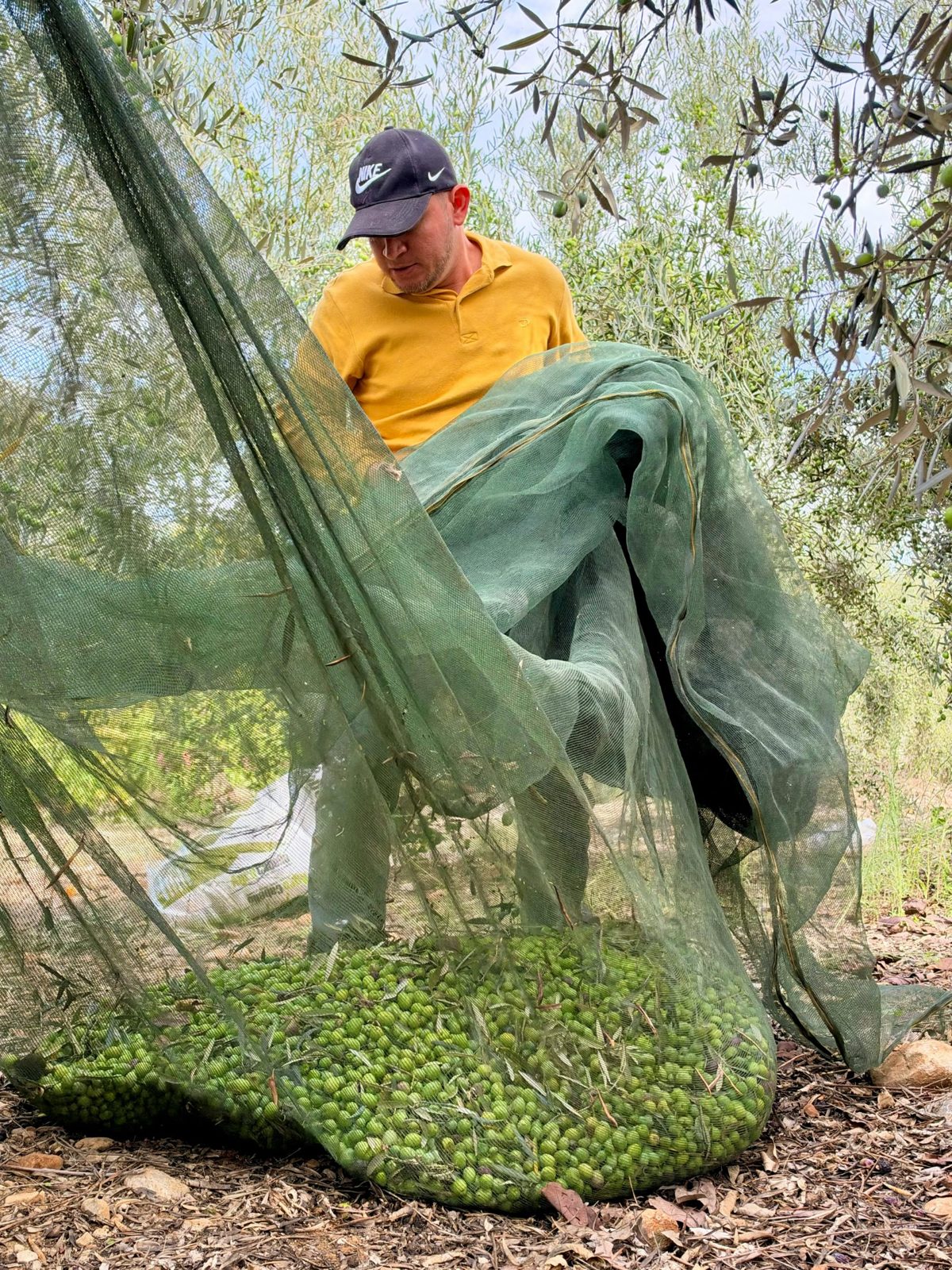
The method has barely changed in centuries. Nets are spread on the ground under each tree, and the olives are combed off the branches by hand or with small vibrating rakes. Then the nets are gathered up, the leaves and twigs picked out, and the olives poured into ventilated crates. Nothing is left on the ground for days: an olive that sits too long starts to ferment, and that is where most defects begin.
Every autumn I am out there too. My father-in-law has sixty olive trees, and each year the whole family helps him with the harvest: nets, ladders, cold fingers and a lot of laughing. It ends the way every Tuscan harvest ends, with the first oil of the year poured over hot toasted bread.
At the mill: from olive to oil in a few hours
Speed is everything. The best producers bring their olives to the mill the same day they are picked, often within a few hours. We take our guests to watch the milling, the frangitura, at a family mill in the hills of Chianti, where the whole process happens in front of you.
- Washing and leaf removal. The olives are blown clean of leaves and washed.
- Crushing. The whole olives, stone included, are crushed into a thick paste.
- Malaxing. The paste is slowly stirred so the tiny drops of oil join together. Temperature matters here: an oil labelled cold extracted must be made below 27°C, which protects its aromas.
- Separation. A centrifuge separates the oil from the water and solids, and out comes a bright green, cloudy stream: the new oil.
That first oil, olio nuovo, is often bottled unfiltered. It is intensely green, grassy and peppery, and it is at its best in the first weeks after the harvest. In Tuscany it is eaten on fettunta: a thick slice of bread, toasted, rubbed with garlic and drowned in oil with a pinch of salt.
How to taste olive oil like a professional
Tasting oil is a lot like tasting wine, only more honest: there is nowhere for a defect to hide. Professional tasters use small coloured glasses, often dark blue, so that the colour does not influence them. Colour, in fact, says almost nothing about quality.
- Pour and warm. A small amount in a glass, covered with your hand, warmed in your palm for a minute. Warmth releases the aromas.
- Smell. Uncover and breathe in. A good oil smells alive: cut grass, green tomato, artichoke, green almond, apple.
- Sip and slurp. Take a small sip and draw in air through your teeth with a sharp hiss. It sounds rude and it is exactly right: the air carries the oil across your whole mouth.
- Wait for the finish. Notice the bitterness on the tongue, then the peppery sting at the back of the throat.
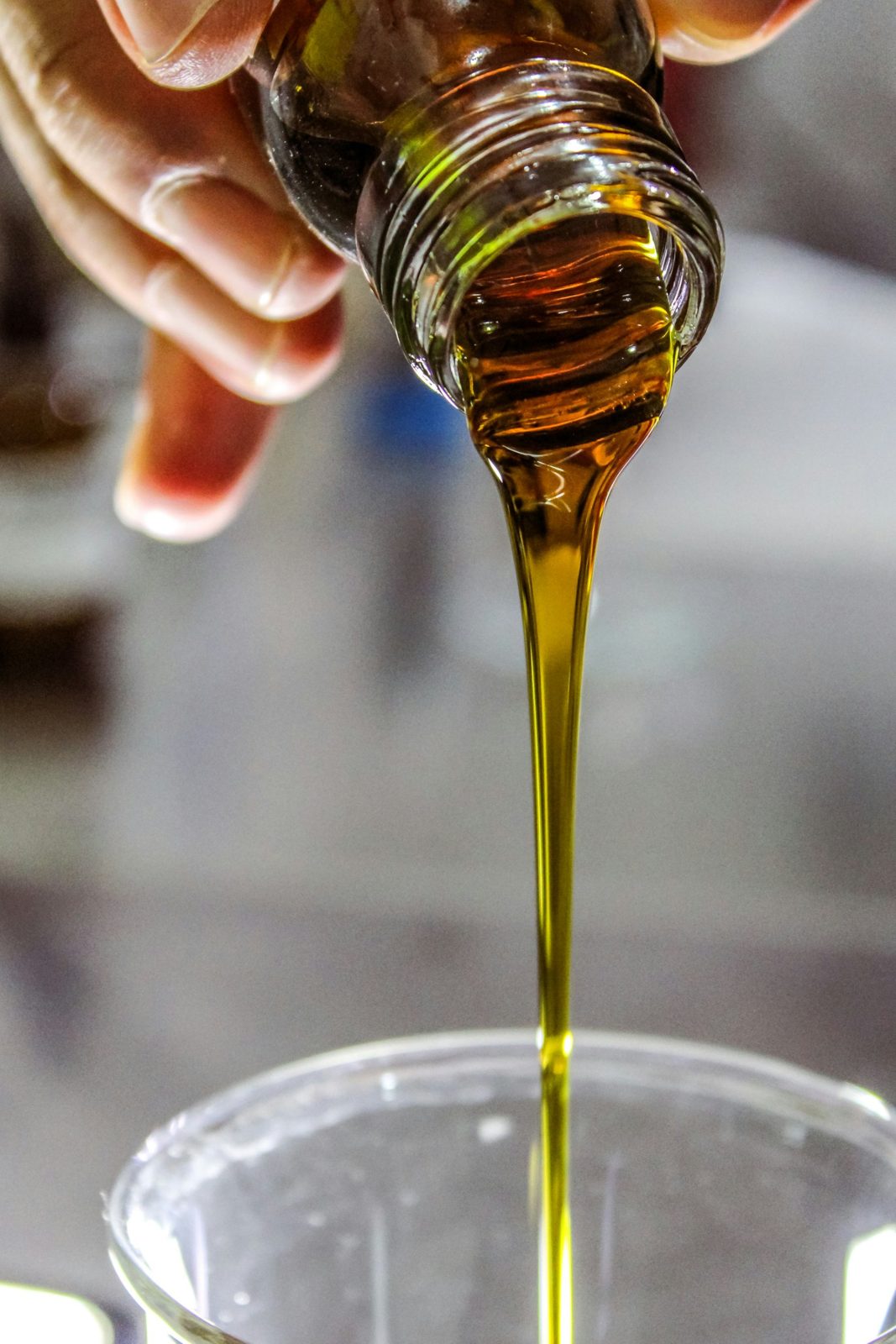
The good: fruity, bitter, pungent
Official tasting panels recognise three positive qualities in extra virgin olive oil:
- Fruity. The smell and taste of fresh, healthy olives, green or riper. This is what makes oil worth buying.
- Bitter. Felt on the tongue, typical of oil from olives picked green. In good Tuscan oil it is lively, not harsh.
- Pungent. The peppery sting in the throat. It comes from natural antioxidants in fresh oil, and if it makes you cough, the oil is doing its job.
Many first-time tasters are surprised that bitter and peppery are compliments. Most of the oil sold abroad is soft and sweet, and that is often because it is old.
The bad: the defects to recognise
Defects are where tasting becomes useful. Once you can name them, you will find them in a surprising number of bottles.
| Defect | What it smells or tastes like | Where it comes from |
|---|---|---|
| Rancid | Old nuts, crayons, stale putty | Oil that is old or has been stored in light and heat |
| Fusty | Sweaty, muddy, overripe black olives | Olives left piled up for days before milling, so they ferment |
| Musty | Damp cellar, mould, mushrooms | Olives kept in humid conditions or mouldy fruit |
| Winey | Vinegar, wine, nail polish | Fermentation of the olives, often from poor storage |
| Frostbitten | Wet wood, flat and dull | Olives damaged by frost on the tree |
An oil with any of these defects cannot legally be called extra virgin. A simple test at home: if your oil smells of nothing, or tastes greasy and flat with no bitterness and no sting at all, it is probably past its best.
Extra virgin, virgin, or just olive oil? The official grades
Behind the words on the label there is a law. European rules divide olive oils into eight grades, and the first thing that separates them is free acidity: the share of fatty acids that have broken away from the oil's molecules, measured in a laboratory as a percentage of oleic acid.
The curious part is that you cannot taste it. Acidity has nothing to do with a sour flavour: an oil at 0.2% and one at 0.7% can taste just as fresh. What it tells you is how healthy the olives were and how fast they reached the mill. Bruised, damaged or overripe olives, or olives left waiting in sacks, start breaking down, and the acidity rises.
| Grade | Maximum free acidity | What it is |
|---|---|---|
| Extra virgin olive oil | 0.8% | Pressed mechanically from the olives, with fruit on the nose and no defects at all at the panel test |
| Virgin olive oil | 2.0% | Also mechanically pressed, but with slight defects allowed |
| Lampante olive oil | over 2.0% | Not fit to eat as it is: it must be refined. The name comes from the oil once burned in lamps |
| Refined olive oil | 0.3% | Lampante oil chemically refined: neutral, with no taste or aroma left |
| Olive oil | 1.0% | A blend of refined oil with some virgin or extra virgin oil, for a little flavour |
| Crude olive pomace oil | no limit | Extracted with solvents from the pomace, the paste left after pressing; must be refined |
| Refined olive pomace oil | 0.3% | Pomace oil after refining |
| Olive pomace oil | 1.0% | Refined pomace oil blended with some virgin oil |
Two things worth knowing. First, the legal limit for extra virgin is 0.8%, but a careful Tuscan producer usually stays far below it, often around 0.2 to 0.3%, and the very best, like the Laudemio oils, can be as low as 0.1%. Second, acidity is not enough on its own: to be called extra virgin an oil must also pass a tasting panel with zero defects and a clear fruity note. That is why a refined oil can have very low acidity and still be the lowest grade on the shelf: refining removes the acidity together with everything that made the oil worth tasting.
How to buy and keep good oil
- Check the harvest date, not only the best-before date. Oil is at its best within a year of the harvest.
- Look for the origin. In Tuscany, Toscano IGP and Chianti Classico DOP guarantee where the olives were grown and milled.
- Choose dark glass or tins. Light and heat are the enemies of oil.
- Store it away from the stove, closed and in a cool cupboard, and use it. Good oil is not for saving.
- Buy from the producer when you can. Most mills ship abroad, which saves you carrying bottles in your luggage.
Laudemio: the oil that wrote its own rules
After the frost of 1985, a group of Tuscan estates decided that the region's oil deserved a standard of its own. At the end of the 1980s they founded the Laudemio consortium, which today brings together around twenty producers in the hills of central Tuscany, most of them in the province of Florence. The name comes from the Middle Ages: the laudemio was the finest share of the harvest, set aside for the lord of the estate.
To carry the name, an oil has to meet rules stricter than the law asks of extra virgin:
- Registered groves only, in a delimited area of the central Tuscan hills, each one classified by soil, varieties and cultivation.
- Early, hand harvest, before the olives are fully ripe.
- Milling within 12 hours of the olives reaching the mill, at low temperature.
- A tasting panel of accredited tasters that must approve every oil before it can be bottled as Laudemio.
- The same bottle for everyone. Each estate keeps its own label, but all Laudemio oils share the same squat bottle and cap, so you recognise one on any shelf.
At one of the family cellars we visit, the Laudemio is poured alongside the wines. Its acidity can be as low as 0.1%, the top of the top. Tasting it is the quickest lesson there is in what fruity, bitter and pungent really mean.
Olive oil on our tours
We taste olive oil on every one of our Tuscan tours. Between the vineyards and the cellars, we stop to explain how the olives grow and how they are picked, then taste the oil together: how to smell it, how to slurp it, what makes it good and which defects to watch for. In the autumn, when the mills are running, we can take you to see the milling itself, and we celebrate the new oil the traditional way: with a proper dinner built around the olio nuovo, the way Tuscan families have always welcomed the first oil of the year.
Questions people ask
When is the olive harvest in Tuscany?
Usually from mid-October to the end of November. Tuscan growers pick early, when many olives are still green, to protect the fruit from the olive fly and because warmer autumns no longer bring the cold spell growers used to wait for. Early picking gives a greener, more peppery oil.
What is Laudemio olive oil?
Laudemio is a consortium of around twenty estates in the hills of central Tuscany, founded after the 1985 frost. Their oils are hand-picked early, milled within 12 hours and approved by a tasting panel, and all share the same recognisable bottle.
Can I visit an olive mill near Florence?
Yes. During the harvest the mills in the Chianti hills work day and night, and some welcome visitors to watch the olives being washed, crushed and turned into oil. Outside the season you can still visit and taste.
How do you taste extra virgin olive oil?
Pour a little into a small glass, warm it in your hand, smell it, then take a sip and draw in air through your teeth so the oil spreads across the mouth. Look for fruit, bitterness and a peppery sting in the throat.
What does acidity mean in olive oil?
Free acidity is a laboratory measure of how much the oil has started to break down, and you cannot taste it. Extra virgin olive oil must stay at or below 0.8%; the best Tuscan oils are often around 0.2 to 0.3%, a sign of healthy olives milled quickly.
Why does good olive oil make you cough?
The peppery sting at the back of the throat comes from natural antioxidants in fresh oil made from healthy, early-picked olives. In a young Tuscan oil, a cough is a compliment.
What is olio nuovo?
The new oil, just pressed and often unfiltered: bright green, cloudy and intensely peppery. It is at its best in the first weeks after the harvest, on toasted bread with a pinch of salt.
Do you taste olive oil on your tours?
Yes, on every one of our Tuscan tours. We explain how the olives grow and are picked, then taste the oil together and talk through its qualities and its defects.